Dachshund Health and Back Pain: Preventing Disc Herniation
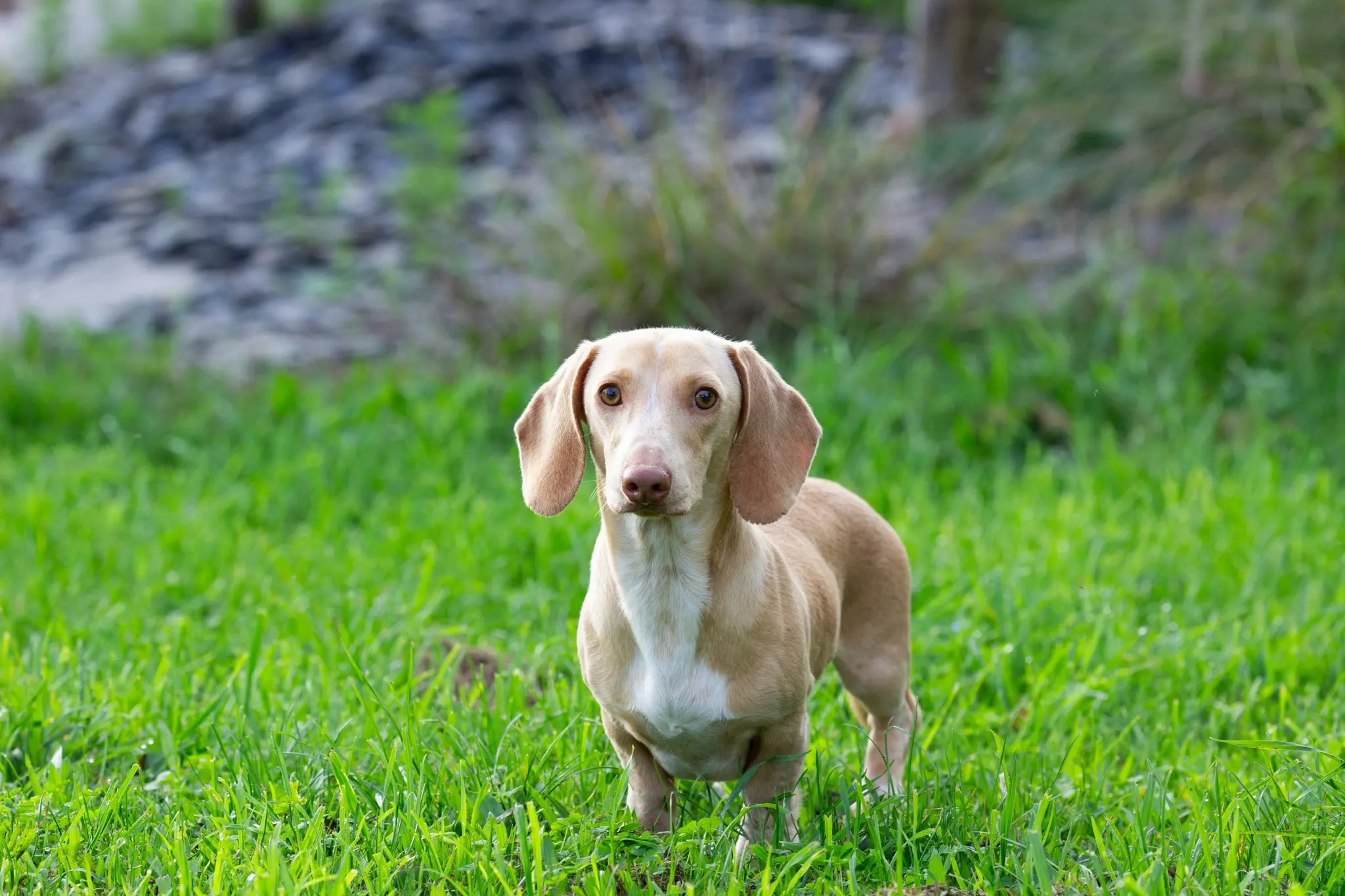
The Dachshund is prone to back problems because of its elongated shape. The main condition is disc herniation (intervertebral disc disease, or IVDD), which affects a significant share of the breed. The good news is that much of the risk can be prevented day to day — weight control, limiting jumps, using a harness instead of a collar, and choosing a puppy from tested parents.
1. Why does the Dachshund have a fragile back?
The Dachshund belongs to the so-called “chondrodystrophic” breeds: its short legs and long back result from a genetic trait that also alters the structure of its intervertebral discs. These discs, which act as shock absorbers between the vertebrae, calcify and weaken earlier than in other dogs. A strain, a jump, or an awkward movement can then trigger a herniation.
2. Disc herniation (IVDD): understanding the risk
Intervertebral disc disease is the number one reason for neurological consultations in Dachshunds. According to veterinary studies, it affects a notable proportion of the breed over a lifetime. It most often occurs between 3 and 7 years of age. Severity ranges from simple back pain to paralysis of the hind legs in severe cases.
Veterinary emergency: if your Dachshund refuses to move, yelps when picked up, drags its hind legs, or is suddenly paralyzed, seek emergency care. The first hours are critical for the prognosis.
Symptoms to watch for
- Hunched back, stiffness, reluctance to climb/descend or jump
- Whimpering or crying when handled
- Wobbly gait, hind legs “dragging”
- Loss of sensation or paralysis in one or more limbs
3. 10 daily prevention habits
| Habit | Why |
|---|---|
| Keep an ideal weight | Excess weight is the number one avoidable risk factor |
| Limit jumps (sofa, bed, car) | The impact on landing strains the discs |
| Install ramps or steps | To reach furniture without jumping |
| Use a harness, not a collar | Avoids jerks on the spine |
| Carry the dog with both hands | Support front and rear, keep the back horizontal |
| Avoid repeated stairs | Going down is especially traumatic |
| Build muscle gently | Regular walking, swimming: a muscled back protects |
| Non-slip floors | Slipping causes twisting |
| Choose tested parents | Genetics play a role in predisposition |
| Take out pet health insurance | Surgery can exceed €3,000 |
4. The role of weight and diet
Every extra kilo increases the strain on the spine. A Miniature Dachshund should stay between 4 and 6 kg, a Kaninchen under 4 kg. Quality food, portioned according to activity level, is the first tool for prevention.
5. The importance of breeder selection
A responsible breeder reduces the risk from birth by testing breeding dogs and selecting healthy lines. At La Crème des Teckels, all our adults are screened for 260 genetic diseases via the Embark laboratory, and we favor balanced body shapes over exaggeratedly long backs. Along with daily prevention, this is the best protection for your future companion.
6. FAQ about Dachshund health
Do all Dachshunds eventually get disc herniation?
No. It’s an increased risk, not an inevitability. Many Dachshunds live their whole lives without back problems, especially when their weight is controlled, jumping is limited, and they come from healthy lines.
At what age does disc herniation appear?
Most often between 3 and 7 years old, but it can occur earlier or later depending on genetics, lifestyle, and the dog’s weight.
Should I really stop my Dachshund from jumping?
You should mainly limit high-impact jumps, especially getting down from the sofa, bed, or car. Ramps and non-slip flooring significantly reduce the risk.
Collar or harness for a Dachshund?
A harness is recommended. It distributes pulling force across the chest and avoids jerks on the cervical spine, unlike a collar.
This article is informative and does not replace veterinary advice. If you have any concerns about your dog’s health, consult a professional.